



Striped Seed Co. | 🏷️ Canada Certified No. 1
Southside Elite Turf-Type Tall Fescue
Southside Elite Turf-Type Tall Fescue
An elite cultivar with fine leaf texture, dark green genetic colour, drought-resistance, and a dense canopy built for heat, traffic, and Canadian summers.
💡 Leftover seed keeps well — great for spot repairs or touch-ups next season.

Free Gift With Any Grass Seed Purchase

Seeding Project Lawn Protector Sign
$7.00 CADFREEImpossible de charger la disponibilité du service de retrait
Same day / next day order processing (on weekdays)
Same day / next day order processing (on weekdays)
Orders placed on weekdays are usually processed same-day or next-day. Orders placed on weekends will be processed on Monday.
FREE Canada-Wide Shipping 🇨🇦
FREE Canada-Wide Shipping 🇨🇦
Orders ship from Toronto and typically arrive in 2-5 business days depending on your location. Orders going to Western Canada and the Maritimes can take a little longer, 5-8 business days.
30-Day Returns
30-Day Returns
Change your mind? We offer 30-day returns on unopened and unused items. Learn more.
Directions for Use
Directions for Use
Apply 2kg per 93 m2 (1,000 sqft) immediately before or after spreading grass seed. Reapply as needed for ongoing lawn care.


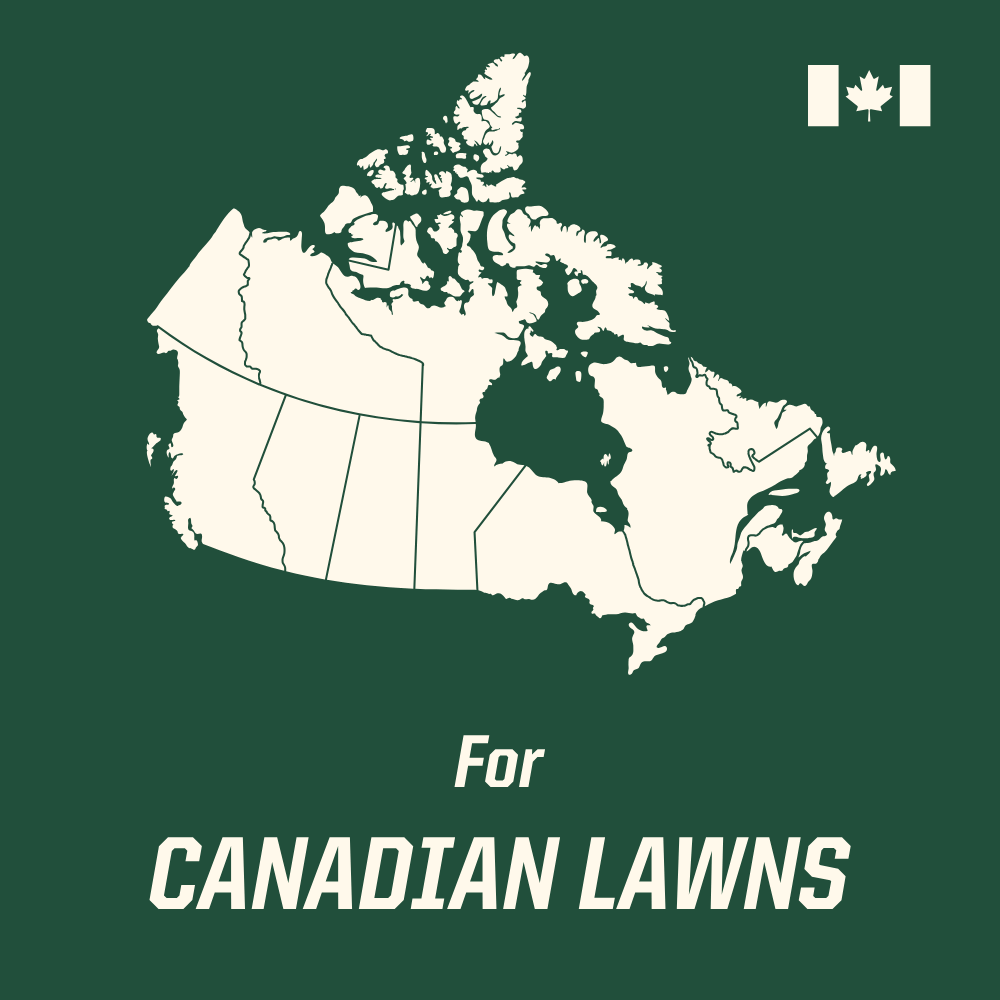
This Isn't Your Grandfather's Fescue
What's in the Bag
One Elite Cultivar. Traceable Genetics.
Southside is a single turf-type tall fescue cultivar developed through a targeted breeding program and selected specifically for elite lawn performance. Every bag of Southside contains certified seed of this one cultivar. You know exactly what you're planting.
What makes Southside different from older tall fescues — and from unnamed, commodity big-box seed — is its parentage. It was bred from three elite parent cultivar lines, each contributing specific traits to the final cultivar:
Southside Parent Cultivar Lines
Motif
Fine leaf texture and high canopy density. This is where Southside gets the tight, uniform appearance that separates it from older fescues.
Titanium 2LS
"Lateral Spread" genetics that promote aggressive tillering — the plant fills gaps and thickens itself from the base. This is what gives Southside its ability to recover from traffic and crowd out weeds.
Paramount
Medium-late maturity that extends green colour deeper into fall. Contributes to overall turf quality and seasonal consistency.
These parent lines were crossed and the resulting offspring selected over multiple generations to combine all three trait sets into a single, stable cultivar. Southside is a hexaploid perennial — a fancy way of saying that it carries six sets of chromosomes, giving it a broad genetic toolkit for adapting to different soil types, pH ranges, and environmental conditions.
This isn't a bag of three different grasses mixed together. It's one grass that was bred to carry the best traits of its parent lines in every plant.
Tested Across 28 Locations. Five Years of Data

Is Southside Right for You?
Colour, Texture, Density
Dark Green. Fine Texture. Dense Canopy.
The first thing you'll notice about an established Southside lawn is the colour. Southside produces a dark green that's genetically stable — meaning it holds that colour without excessive nitrogen applications. You're not chasing colour with fertilizer. The grass grows that way naturally.
The leaf texture is officially categorized as medium-fine. When maintained at the recommended mowing height, Southside produces a tight, clean canopy. The blade width is comparable to many modern Kentucky bluegrass cultivars.
Density is where Southside separates itself. The Titanium 2LS genetics in its breeding promote aggressive tillering — the plant produces new shoots from its base, filling gaps and thickening the canopy from within. Combined with the high shoot density inherited from its Motif parentage, the result is a tight, sod-like stand that stripes cleanly and resists weed invasion.
Southside also retains its colour later into the fall than many other cool-season grasses. Its Paramount parent genetics contribute a medium-late maturity profile, which means the lawn stays green and active while other grasses are shutting down for the season.

Root Depth and Drought Performance
Roots That Go Where Other Lawn Grasses Can't
This is the performance trait that makes turf-type tall fescue fundamentally different from other cool-season lawn grasses — and the reason Southside handles summer heat the way it does.
Under favourable soil conditions, turf-type tall fescue has been documented with roots extending several feet deep — significantly deeper than Kentucky bluegrass or perennial ryegrass. In a typical residential lawn, you won't hit those maximums, but the comparative advantage is real. When surface moisture dries up during a July or August dry stretch, Southside's deeper root system can access water stored in the subsoil that shallower-rooted grasses simply can't reach.
The practical result: your lawn can stay green and actively growing through the kind of extended summer heat that puts stress on conventional turf. You can water less frequently. You see fewer thin or stressed areas during heat waves. The lawn holds up through the conditions that cause the most damage.
This is drought avoidance — the plant stays metabolically active because it has access to deep moisture. It's not surviving by shutting down. It's growing because it can reach water other grasses can't.
For homeowners who irrigate, the deep root system means your watering goes further. Deep, infrequent watering reinforces root depth — the grass is designed to reward the kind of irrigation schedule that's actually best for long-term lawn health.
Bonus: Water Savings
Data from the Alliance for Low Input Sustainable Turf (A-LIST) shows that elite turf-type tall fescue cultivars can maintain quality with 25–40% less irrigation than conventional cool-season turf. For homeowners, that means fewer sprinkler sessions and lower water bills — not because you're cutting corners, but because the root system is doing the work for you.

Built-In Pest Defence
Natural Insect Resistance — Built Into Every Plant
Southside carries beneficial endophytic fungi that live inside the plant. These fungi produce natural compounds that deter common lawn pests — chinch bugs, sod webworms, and billbugs — without any chemical application from you.
Across most of Canada, cosmetic pesticide bans mean you can't spray your way out of a chinch bug problem. Grass with built-in endophyte activity gives you an advantage that most lawn grasses don't offer.
The same endophytes also contribute to the plant's overall stress tolerance and persistence. It's one of the reasons turf-type tall fescue stands tend to get thicker and more established over time rather than thinning out — the plants are naturally more resistant to the biological pressures that weaken other grasses.

Density & Weed Suppression
A Dense Canopy That Crowds Out Weeds
One of the most practical advantages of Southside is what happens at the soil surface. The aggressive tillering from its Titanium 2LS parent genetics means the plant produces new shoots from its base, thickening the canopy from within. Combined with the high shoot density inherited from its Motif parentage, the result is a tight, sod-like stand that blocks light from reaching the soil.
Why that matters: most common lawn weeds — crabgrass, clover, knotweed — need light to germinate. A dense turf canopy blocks light at the soil surface, reducing weed germination pressure before it starts. The thicker your Southside stand gets, the less hospitable it becomes for weeds.
This doesn't mean you'll never see a weed. But it means you'll spend less time dealing with them, and the weeds you do get will have a harder time establishing in a thick, competitive turf.

Seeding Guide


MAINTENANCE AFTER ESTABLISHMENT
Long-Term Care
One of the reasons homeowners switch to turf-type tall fescue is reduced maintenance. Here's what that looks like in practice:
Mowing: 3.0–3.5 inches, once per week during active growth. Taller mowing supports deeper roots and better drought performance. You can go lower for a more manicured look, but you'll need to compensate with tighter irrigation and fertility.
Fertilizer: Southside holds its dark green colour genetically, so it doesn't need to be pushed hard with nitrogen to look good. A balanced fertility program through the growing season is all it needs. Avoid heavy late-fall nitrogen, which promotes soft top growth heading into winter and increases snow mold risk.
Watering: Deep and infrequent. Once established, Southside can typically go 7–10+ days between waterings in most conditions. When you water, soak the soil to encourage deep rooting. Frequent light watering trains roots to stay shallow, which defeats the purpose.
Overseeding: Plan to overseed thin or worn areas annually, ideally in late August or early September. TTTF's fast germination helps you see results sooner, which makes the effort worth it.
Memberships & Associations
-

Ontario Turfgrass Research Foundation
-

Sports Turf Canada
-

Ontario Golf Superintendents' Association
-

Professional Lawn Care Association of Ontario
- Le choix d'une sélection entraîne l'actualisation de la page entière.
- S'ouvre dans une nouvelle fenêtre.